Large-Scale Optimization Proxies
Learning fast solution mappings for large mixed-integer problems with strong temporal and system-wide coupling.
Georgia Tech ISyE · NSF AI4OPT
Ph.D. Student · Machine Learning & Optimization
Optimization-grounded machine learning for constrained sequential decision-making under uncertainty.
I develop fast, feasibility-preserving methods for large-scale decision systems whose actions are coupled over time and across system components.
Advised by Prof. Pascal Van Hentenryck
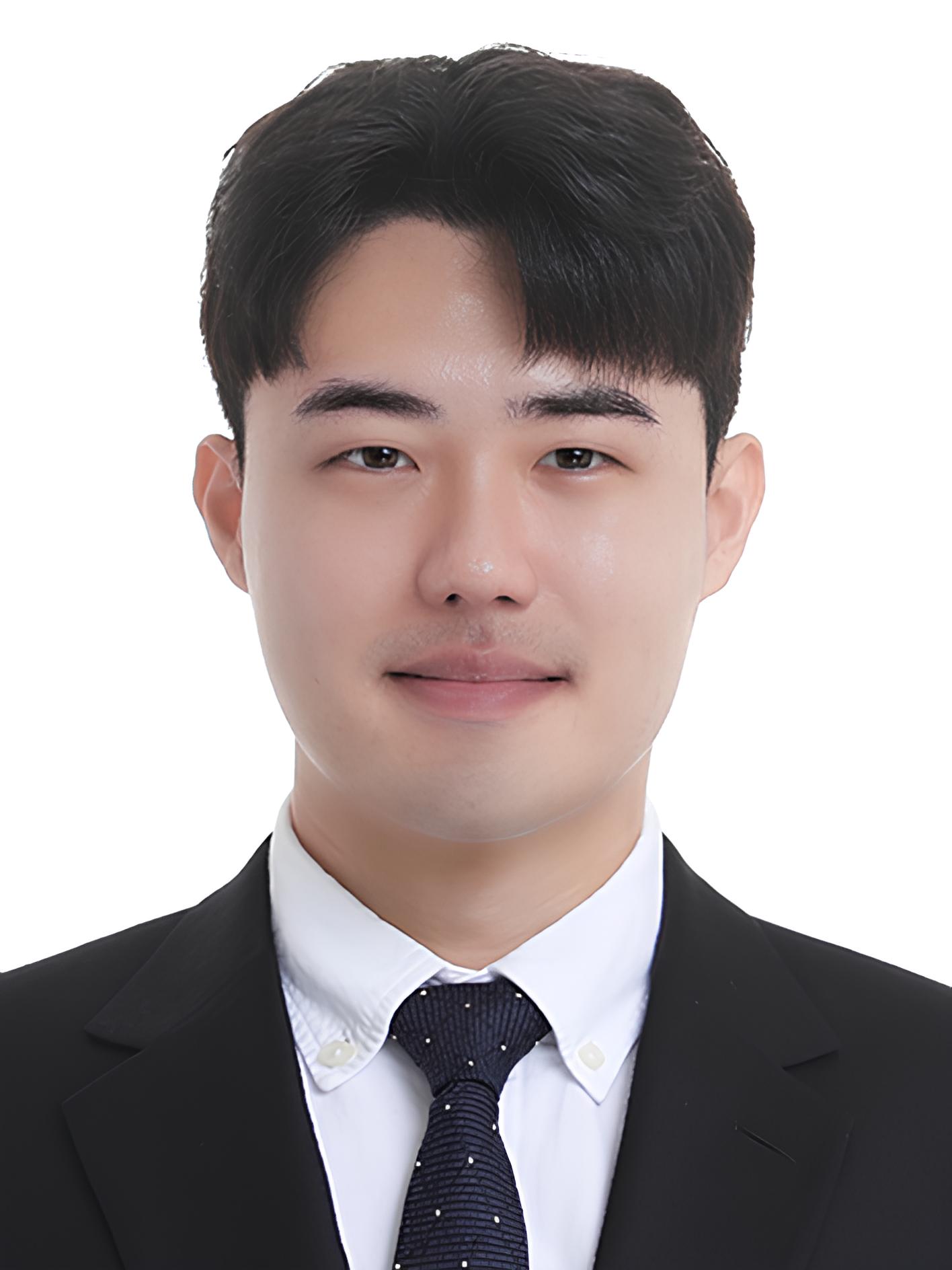
About
I develop optimization-grounded machine learning methods for systems whose decisions are coupled over time and across system components, and must satisfy hard operational constraints. My work studies how learned models can propose or construct decisions while optimization structure and feasibility repair preserve temporal and system-wide consistency.
My current work develops full ML proxies for large-scale mixed-integer optimization and context-conditioned policies for multistage stochastic optimization. The proxy research targets instances with more than 100,000 discrete variables and millisecond-scale inference and repair. My earlier work in time-series forecasting and anomaly detection provides a foundation in long-range temporal modeling, multivariate dependency learning, and uncertainty-aware representation.
Research
Learning methods for fast, feasible decisions in large-scale systems with temporal and system-wide coupling.
Learning fast solution mappings for large mixed-integer problems with strong temporal and system-wide coupling.
Developing context-conditioned policies for multistage settings where information arrives over time and decisions must remain operationally valid.
Integrating optimization structure, structured repair, and deployment-aligned objectives into learned decision pipelines.
Long-range temporal representation, multivariate dependency modeling, scenario generation, and uncertainty calibration.
Selected Projects
Current and earlier research across optimization proxies, multistage decision policies, and sequential representation learning.
Developing a full ML proxy for large-scale, temporally coupled mixed-integer optimization. The target instances contain more than 100,000 discrete variables, and the research aims to combine learned inference with structured feasibility repair at millisecond-scale latency while preserving system-wide operational constraints.
Developing context-conditioned decision policies for multistage stochastic optimization, with optimization-integrated training, feasibility-aware deployment, and stage-wise evaluation under the information available at each decision point.
View DecisionRules.jlPublications
Work across time-series forecasting, anomaly detection, and sequential representation learning.
* Equal contribution.
Artificial Intelligence Review
A structured review of deep-learning architectures for time-series forecasting and the open problems that shape reliable long-horizon prediction.
View publicationInternational Journal of Applied Engineering Research, 11(9), 6655–6659
Early work on posture-based control for a robotic fixation device.
View journal issueApplied Research / Experience
Industry collaborations and independent work across credit risk, mobility, batteries, markets, and industrial diagnostics.
Georgia Institute of Technology · NSF AI4OPT
Researching learning-augmented optimization and scalable decision policies for large, structured systems under the supervision of Prof. Pascal Van Hentenryck.
Equifax · Atlanta, USA
Built an end-to-end attention-based credit risk modeling framework and developed PCA/CCA-guided analyses connecting latent Transformer features to human-defined credit attributes.
Independent Research
Developed a leakage-safe multi-asset data pipeline, a calibrated multi-task Transformer, and cost-aware backtests with volatility-scaled sizing, exposure limits, and drawdown controls.
Hyundai · Seoul, South Korea
Automated optimal transmission-control calibration maps and developed a constraint-driven, physics-consistent model-to-vehicle matching pipeline.
LG Energy Solution · Seoul, South Korea
Designed process-aware tokenization and contrastive learning for highly imbalanced, noisy charge-discharge data, then fused time-series embeddings with expert tabular features.
Hyundai Genesis · Seoul, South Korea
Developed deep-learning methods to predict motor calibration maps from sparse operating-point data for reducing sixth-harmonic torque ripple and noise.
PricewaterhouseCoopers Consulting · Hwaseong, South Korea
OnePredict · Seoul, South Korea
Education
Ph.D. Student, Industrial Engineering
NSF AI Institute for Advances in Optimization (AI4OPT)
Advisor: Prof. Pascal Van Hentenryck
M.S., Artificial Intelligence
Data Science & Artificial Intelligence Laboratory (DSAIL)
Advisor: Prof. Sungroh Yoon
B.S., Mechanical Engineering
Summa Cum Laude
Contact
The most direct way to reach me is by email. You can also find my publications and current work through the profiles below.
djlee@gatech.edu